
Emergency response operations require highly specialized apparatus configurations. A standard commercial chassis cannot mitigate complex thermal events without severe structural modifications. Integrating high-volume centrifugal pumps transforms base platforms into dedicated suppression vehicles.
Understanding the engineering behind these modifications prevents critical failures during active deployments. The structural layout directly impacts pump flow stability. It also dictates the dynamic driving performance under maximum payload conditions.
Evaluating the core mechanics ensures fleet managers select the appropriate vehicle architecture. A mismatched chassis can easily compromise critical emergency response times.
How Superstructure Mechanics Define Vehicle Performance
The core functionality of any suppression vehicle relies on chassis integration. Manufacturers mount custom subframes to distribute shifting liquid payloads evenly. This precise engineering prevents structural warping during high-speed emergency responses.
The Power Take-Off (PTO) unit serves as the critical mechanical bridge. It transfers kinetic energy from the diesel engine directly to the pump. Consistent PTO engagement ensures uninterrupted water flow across variable engine RPMs.
Material selection for the superstructure dictates long-term fleet viability. Standard carbon steel provides rigidity but demands continuous anti-corrosion treatments. Many modern engineering teams utilize polypropylene tanks for coastal environments.
These synthetic structures resist chemical degradation effectively. Polypropylene also significantly reduces the overall curb weight of the apparatus. This weight reduction allows engineers to maximize the total water payload.
Centrifugal Fire Pump Mechanics
A centrifugal pump is the operational heart of modern suppression units. It utilizes a rapidly spinning impeller to accelerate water outward. This kinetic energy converts into discharge pressure within the pump volute.
Unlike positive displacement models, centrifugal designs can utilize incoming hydrant pressure. The spinning impeller simply adds velocity to the pressurized incoming water. This characteristic makes them ideal for high-volume municipal relay operations.
If discharge valves are suddenly closed, the impeller safely churns the internal water. This prevents catastrophic mechanical ruptures inside the plumbing system. However, prolonged churning causes internal cavitation and thermal damage.
Primary Types of Fire Trucks Manufactured in China
Different types of fire trucks utilize completely distinct suppression mechanisms. Chinese OEMs engineer various configurations to counter specific thermal characteristics. Selecting the wrong apparatus often leads to inadequate fire flow.
- Water Tanker Apparatus: These units deploy primarily for Class A structural fires. They feature internal baffles to control liquid surge during transit. Capacities generally range from 3,000L to 10,000L based on the axles.
- Foam Tender Vehicles: Petrochemical fires destroy standard water-based suppression attempts instantly. Foam tenders inject specialized synthetic concentrates into the discharge stream. This creates a thick chemical blanket that smothers flammable liquid vapors.
- Rescue Tool Trucks: Technical rescues require pneumatic lifting bags and hydraulic extraction tools. These chassis lack heavy liquid payloads entirely. They feature compartmentalized aluminum storage racks for rapid equipment deployment.
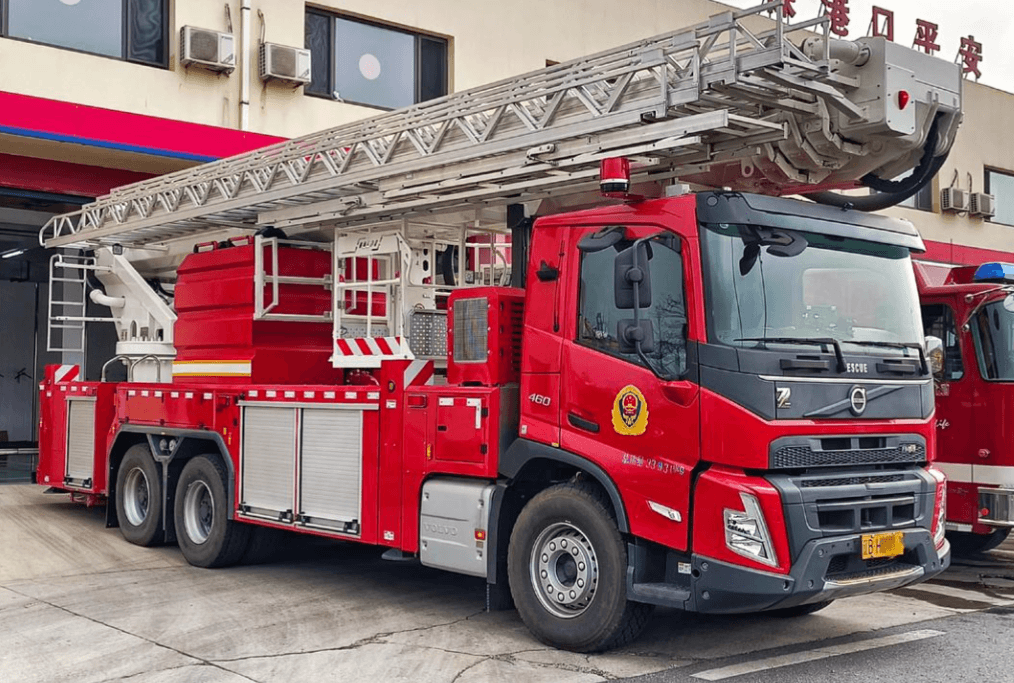
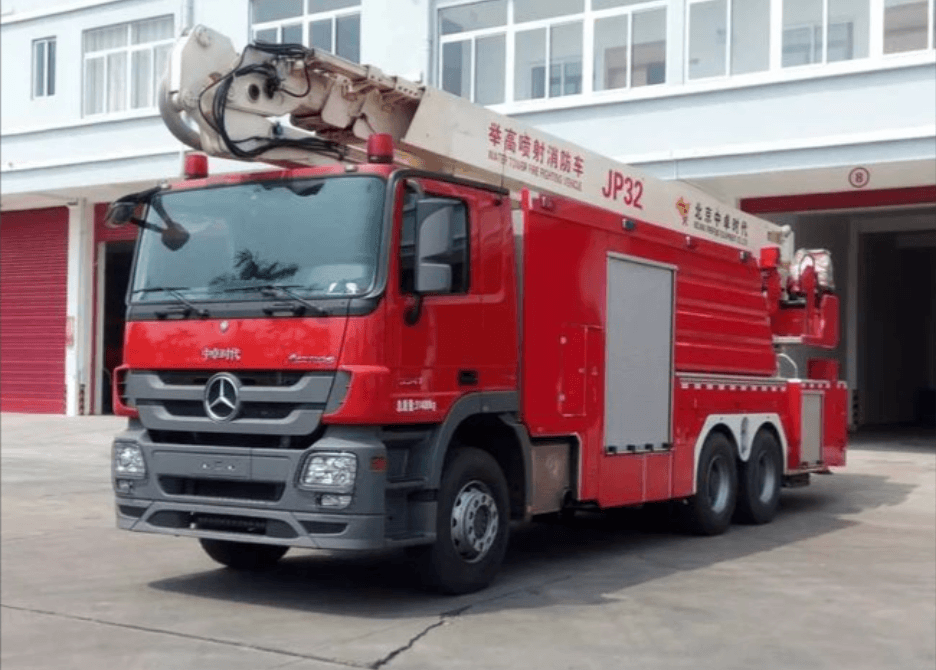
- Aerial Platform Trucks: High-rise structural events exceed the vertical reach of standard deck monitors. Aerial units utilize hydraulically stabilized boom structures. They deliver sustained water streams while supporting secondary rescue operations.
| Apparatus Category | Primary Extinguishing Agent | Target Hazard Class | Tank Capacity Range |
|---|---|---|---|
| Water Tanker | Pressurized Water | Class A (Combustibles) | 3,000L – 10,000L |
| Foam Tender | Foam Concentrate Blend | Class B (Flammables) | 8,000L – 16,000L |
| Rescue Truck | None (Hydraulic Tools) | Structural Traps | Not Applicable |
| Aerial Platform | Standpipe Water Relay | High-Rise Structures | Not Applicable |
Advanced Foam Proportioning Systems
Class B fires require precise chemical mixtures to achieve suppression. Foam proportioning systems inject concentrated foam liquid into the main water stream. The system must adapt to fluctuating hose line pressures instantly.
Venturi-style inductors rely on water velocity to create an internal vacuum. This vacuum draws the synthetic concentrate directly into the plumbing. It is a highly reliable mechanical system requiring minimal maintenance.
More advanced setups utilize balanced pressure proportioners for massive industrial incidents. A secondary positive-displacement pump injects concentrate at a slightly higher pressure. This allows engineers to vary foam percentages across multiple independent outlets.
The Crucial Role of Internal Tank Baffles
Transporting thousands of liters of water introduces severe kinetic hazards. Liquid surge occurs rapidly when a heavy apparatus brakes suddenly. The moving mass of water transfers kinetic energy directly to the front axle.
Engineers weld internal transverse and longitudinal baffles inside the holding tank. These rigid walls disrupt the momentum of the shifting liquid. They contain small flow openings to allow even weight distribution.
Without proper baffling, a cornering maneuver could easily induce a vehicle rollover. Baffle integrity remains a critical inspection point during routine fleet maintenance. Failed baffles destroy chassis alignment over time.
Industrial vs. Municipal Applications for Emergency Vehicles
Urban environments impose strict dimensional constraints on emergency apparatus. Municipal fire departments prioritize tight turning radii and rapid acceleration. Engineers often select medium-duty commercial platforms for these urban tankers.
Industrial facilities face entirely different threat matrices during operations. Oil refineries and chemical storage plants experience rapid-growth thermal events. These environments require heavy-duty chassis structures supporting massive foam payloads.
In petrochemical operations, remote-controlled deck monitors are strictly mandatory. Manual hose deployment exposes response personnel to lethal radiant heat. Industrial units utilize automated systems to generate high-expansion foam continuously.
Chassis Frame Reinforcement Logic
In large-volume production, commercial truck frames flex intentionally to absorb road impacts. However, excessive torsion damages rigid superstructure components. Manufacturers install floating subframes to isolate the tank from twisting.
Spring-loaded mounting brackets absorb dynamic shocks during off-road travel. This engineering approach prevents the rigid tank seams from cracking. It is especially vital for heavy-duty multi-axle configurations.
For outdoor applications in rural areas, frame durability dictates fleet survival. A rigid mount on a flexible chassis causes immediate weld failures. Engineers calculate torsional stress tolerances before mounting the pump house.
How to Evaluate Different Types of Fire Trucks for Export
Evaluating different types of fire trucks requires a thorough topographical analysis. Drive axle configurations must match the local operational terrain perfectly. A standard 4x2 urban pumper accelerates rapidly on paved municipal avenues.
Rural forestry responses frequently demand specialized 4x4 or 6x6 configurations. These multi-axle systems maintain critical traction on unstable soil. Matching drive trains to operational environments prevents catastrophic vehicle immobilization.
Engine emissions standards also dictate international platform viability. Euro III engines dominate regions with inconsistent diesel refinement capabilities. Modern Euro VI platforms integrate complex particulate filters for urban compliance.
For teams analyzing specialized configurations, exploring standard Fire Fighter Trucks helps baseline capacity limits. Reviewing detailed structural blueprints ensures the PTO matches required fire flow. Facility managers can further study specific payload combinations in this fire trucks for sale guide. These resources assist in matching vehicle architecture to exact application needs.
Reference Sources
- National Fire Protection Association (NFPA) 1901: Standard for Automotive Fire Apparatus
- European Standard (EN) 1846: Firefighting and Rescue Service Vehicles
- International Organization for Standardization (ISO) 9001: Quality Management Systems in Manufacturing