
Buying a fire truck is not only about choosing a vehicle with a water tank and pump. The right configuration depends on your firefighting needs, road conditions, local regulations, and maintenance capability.
Chinese fire truck manufacturers provide a wide array of solutions, including water tank fire trucks, foam fire trucks, rescue vehicles, and aerial platform trucks. This guide explains the main vehicle types, prices, chassis options, and the export process to help international buyers make the right procurement decisions.
Why Buy Fire Trucks from China?
Chinese manufacturers export fire trucks to many regions, including Africa, Southeast Asia, the Middle East, and South America. Buyers often choose China because manufacturers can provide flexible customization, competitive pricing, and various commercial chassis options.
For international buyers, the main advantages of sourcing fire trucks from China include competitive manufacturing costs and access to multiple reliable commercial chassis platforms such as Isuzu, Dongfeng, Sinotruk, and FAW.
Compared with purchasing standard models from local distributors, direct procurement from Chinese OEM manufacturers allows fleet operators to customize tank capacity, pump specifications, storage compartments, rescue equipment layouts, and export requirements according to their exact operational conditions.
Many Chinese manufacturers also support overseas delivery, technical documentation, spare parts supply, and after-sales service to help international customers maintain long-term fleet reliability.

How Do Chassis and Superstructure Designs Impact Fire Truck Performance?
The chassis is the foundation of a fire truck. It affects payload capacity, driving stability, fuel consumption, and maintenance costs. Manufacturers build custom superstructures upon commercial or custom-built chassis platforms. The integration between the subframe and the chassis is critical, as it determines the vehicle's center of gravity.
Proper payload distribution ensures stability during high-speed emergency maneuvers. The Power Take-Off (PTO) unit transfers engine power directly to the water pump. This mechanical linkage guarantees consistent water flow during prolonged fire suppression operations.
Superstructure materials directly affect the vehicle's lifespan. Standard options include:
- Carbon Steel: Cost-effective but requires rigorous anti-corrosion treatments.
- Aluminum Alloy: Lightweight construction that resists rust and improves payload capacity.
- Polypropylene (PP): Lightweight and corrosion-resistant. PP tanks are commonly selected for customers who operate in humid or coastal environments because they require less maintenance than traditional steel tanks.
- Stainless Steel: Often utilized for specific chemical applications or industrial foam tanks.
Popular Fire Truck Chassis Options in China
Selecting the correct chassis is one of the most important decisions when purchasing a fire truck. The chassis affects payload capacity, driving performance, maintenance requirements, and overall operating costs. Common chassis options used by Chinese fire truck manufacturers include:
- Isuzu Fire Truck Chassis: Widely used for municipal and urban fire trucks due to their fuel efficiency, reliability, and strong global service network.
- Dongfeng Fire Truck Chassis: Provides cost-effective solutions for developing markets. These chassis are commonly selected for water tankers and medium-duty rescue vehicles.
- Sinotruk Fire Truck Chassis: Heavy-duty chassis suitable for large-capacity water tankers, foam fire trucks, and industrial firefighting applications.
- FAW Fire Truck Chassis: Offers reliable performance for commercial emergency vehicles and is widely available in many export markets.
The best chassis choice depends on road conditions, climate environment, required payload, and local maintenance capability.
Why Choose a Chinese Fire Truck Factory?
- OEM production capability with extensive customization
- 20+ years of manufacturing experience
- Proven track record exporting to multiple countries
- Access to diverse, custom chassis options
- Reliable spare parts support
- Comprehensive after-sales service
Specialized Types of Fire Trucks for Sale in the Chinese Market
Chinese original equipment manufacturers (OEMs) produce diverse apparatus configurations. Buyers must match the vehicle type to their exact operational hazards, as standard municipal fleets differ drastically from industrial response units.
- Water Tanker Fire Trucks: The most common type used by municipal fire departments. They are designed for daily firefighting operations in cities, towns, and industrial areas. They typically feature capacities ranging from 3,000L to 10,000L. Manufacturers often utilize Isuzu or Dongfeng chassis for optimal urban maneuverability.
- Foam Fire Trucks: Mainly used in oil terminals, chemical plants, airports, and other locations where flammable liquid fires may occur. These heavy-duty trucks carry both water and foam concentrate. High-capacity models reach 16,000L to suppress severe petrochemical fires.
- Rescue Tool Vehicles: These specialized trucks carry minimal or zero water payloads. They transport hydraulic rescue tools, generators, and pneumatic lifting systems. Emergency teams deploy them primarily for traffic collisions and structural collapses.
| Apparatus Type | Primary Agent | Ideal Application | Standard Capacity |
|---|---|---|---|
| Water Tanker | Water | Urban Municipal Fire | 3,000L - 10,000L |
| Foam Tender | Foam / Water | Petrochemical Hazards | 8,000L - 16,000L |
| Rescue Vehicle | N/A | Technical Rescues | N/A |
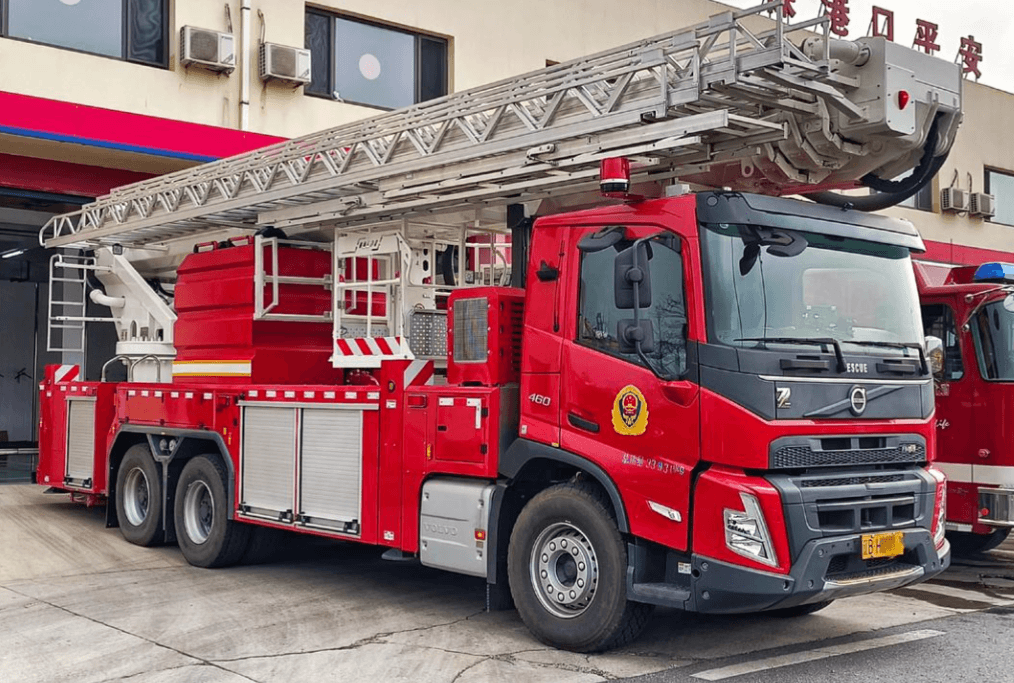
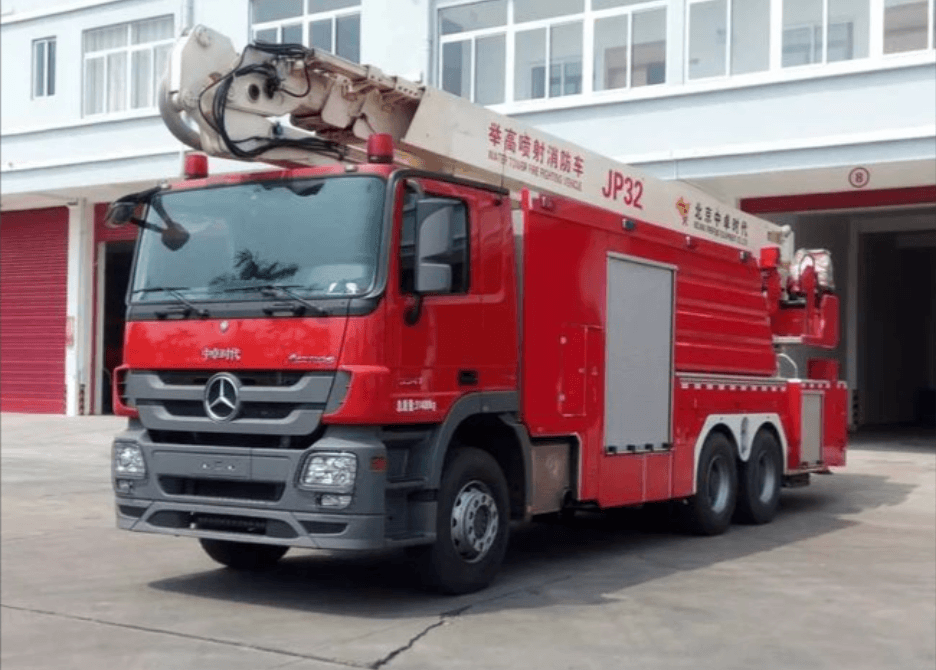
| Aerial Platform | Water (Standpipe) | High-Rise Buildings | 30m - 60m Reach |
Fire Truck Prices in China: Cost Breakdown and Factors
The price of fire trucks in China varies significantly depending on chassis selection, water capacity, pump system, materials, and customization requirements.
Typical export prices are estimated below:
| Fire Truck Type | Estimated Price Range |
|---|---|
| Small Water Tank Fire Truck | USD 35,000 - 70,000 |
| Medium Water Tender Truck | USD 60,000 - 120,000 |
| Heavy Duty Foam Fire Truck | USD 100,000 - 200,000 |
| Rescue Fire Truck | USD 70,000 - 150,000 |
| Aerial Platform Fire Truck | USD 180,000 - 500,000 |
Several factors influence the final quotation:
- Chassis Brand: Imported chassis brands usually increase the total cost, while domestic platforms such as Dongfeng, FAW, and Sinotruk provide more economical solutions.
- Tank Capacity: A larger water or foam tank requires stronger chassis structures and increases manufacturing costs.
- Pump System: Standard domestic pumps provide cost-effective solutions, while integrating international brands such as Hale, Darley, Waterous, and Godiva increases the vehicle price.
- Customization Requirements: Additional equipment—including hydraulic rescue tools, foam systems, remote monitors, lighting towers, and specialized compartments—can significantly affect the final quotation.
Industrial vs. Municipal Applications: Specifying the Right Apparatus
Risk assessment dictates specific vehicle procurement strategies. Facility managers must calculate the required fire flow for worst-case scenarios. Accurate hazard analysis prevents the costly error of under-equipping a department.
Municipal environments demand highly versatile response vehicles. These units must navigate tight urban streets while maintaining adequate turning radii. Most municipal water tender trucks use centrifugal fire pumps because they provide reliable medium-flow performance for structural fire suppression.
Industrial facilities face entirely distinct suppression challenges. Petrochemical plants deal frequently with Class B flammable liquid hazards. These environments require heavy-duty foam systems and high-velocity remote deck monitors.
B2B Procurement Workflow and Manufacturer Evaluation
Sourcing specialized vehicles requires a structured manufacturer evaluation process. Before placing an order, buyers should check the manufacturer's production capability, previous export experience, certifications, and after-sales support. A reliable OEM provides extensive CAD modifications without compromising chassis stability.
International buyers must confirm relevant compliance and testing certifications. Some export-oriented manufacturers can design fire apparatus according to EN 1846 or NFPA 1901 requirements upon request. Buyers should always request specific test reports regarding braking distances and pump flow rates.
When analyzing equipment options, centralized platforms streamline the evaluation process. Engineers can review distinct payload capacities and custom superstructure designs efficiently. Standard lead times for custom apparatus manufacturing range from 45 to 90 days. Buyers must finalize detailed technical drawings before production begins. Post-delivery aftermarket support and spare parts availability remain critical for long-term fleet maintenance.
China Fire Truck Export Process
International buyers usually follow a structured procurement process when importing fire trucks from China:
1. Technical Requirement Confirmation
Buyers should provide detailed requirements including:- Vehicle application
- Water/Foam tank capacity
- Chassis preference
- Pump flow rate
- Emission standards
- Local road conditions
2. Configuration Proposal
The manufacturer evaluates operational requirements and provides a recommended vehicle configuration, detailed technical drawings, and a formal quotation.3. Production and Quality Inspection
After order confirmation, the OEM begins chassis preparation, superstructure manufacturing, equipment installation, and performance testing. Important inspection items include:- Pump flow testing
- Water leakage testing
- Driving performance testing
- Electrical system inspection
4. Shipping and After-Sales Support
Export manufacturers normally provide:- Operation manuals
- Spare parts lists
- Shipping documents
- Remote technical support
Note: Reliable after-sales support is essential for emergency vehicles because downtime directly affects firefighting capability.
Reference Sources
- National Fire Protection Association (NFPA) 1901: Standard for Automotive Fire Apparatus
- European Standard (EN) 1846: Firefighting and rescue service vehicles
- International Organization for Standardization (ISO) 9001: Quality management systems