
The distinction between Basic Life Support (BLS) and Advanced Life Support (ALS) ambulances is more than just a matter of terminology; it defines the clinical capability of a mobile medical unit and determines the level of intervention possible during the "Golden Hour" of emergency care. For hospital administrators, emergency service providers, and fleet procurement managers, understanding these technical variations is essential for matching vehicle specifications to regional healthcare needs.
In the global manufacturing landscape, particularly within China’s specialized vehicle sector, ambulances are categorized based on their internal configuration, medical payload, and the complexity of their onboard life-support systems.
What Defines the Technical Boundary Between BLS and ALS?
At its core, a BLS ambulance is designed for "Transport and Stabilize" protocols. It serves patients who require medical monitoring but do not have life-threatening conditions that necessitate invasive procedures. In contrast, an ALS ambulance—often referred to as a "Mobile ICU" or "Monitoring Type" ambulance—is engineered for "Active Intervention."
The technical boundary is defined by the integration of advanced diagnostic tools and the structural capacity to house complex life-sustaining equipment. While a BLS unit focuses on non-invasive care, an ALS unit provides the infrastructure for invasive airway management, cardiac monitoring, and advanced drug administration.
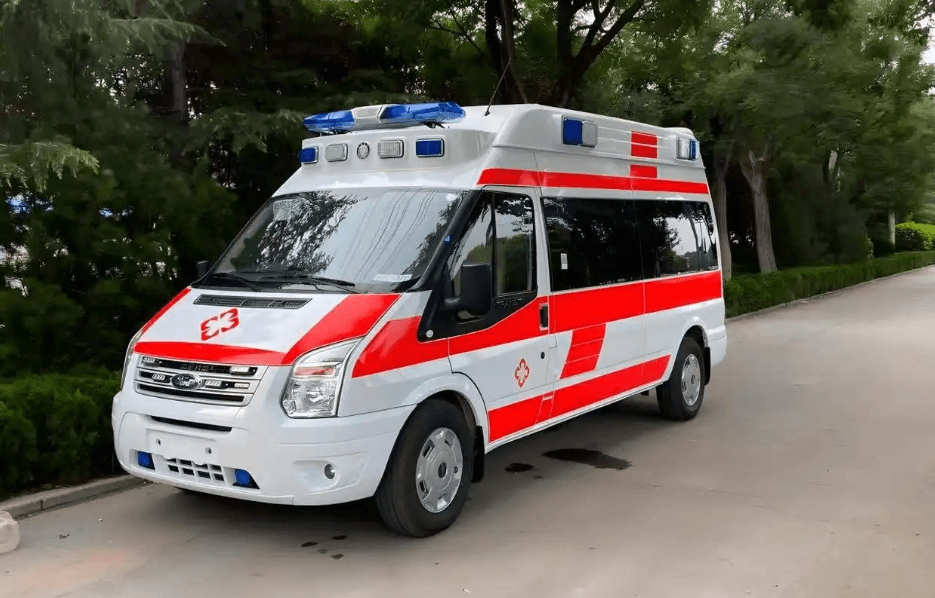
Equipment Matrix: A Detailed Comparison of Life Support Systems
The primary differentiator in the BLS vs ALS ambulance debate lies in the medical inventory. When manufacturers like CN Special Vehicle configure these units, the internal cabinetry and power systems must be customized to support specific device loads.
| Feature/Equipment | BLS Ambulance (Basic Life Support) | ALS Ambulance (Advanced Life Support) |
|---|---|---|
| Primary Goal | Non‑invasive emergency care & transport | Invasive life support & intensive monitoring |
| Airway Management | Oxygen masks, BVM, Oropharyngeal airways | Endotracheal intubation, Ventilators, LMA |
| Cardiac Support | Automated External Defibrillator (AED) | Manual Defibrillator/Monitor (12‑lead ECG) |
| Medication | Basic (Oxygen, Glucose, Epinephrine pen) | Advanced (IV fluids, Anti‑arrhythmics, Sedatives) |
| Diagnostic Tools | Pulse oximetry, BP cuff, Thermometer | Capnography, Blood chemistry analyzers (PoCT) |
| Power Supply | Standard 12V/220V inverter (limited) | High‑capacity pure sine wave inverters/UPS |
In an ALS configuration, the vehicle must support a continuous power draw for ventilators and multi-parameter monitors. This often requires upgraded alternators and dual-battery systems to ensure medical equipment remains functional even when the engine is off.
Interior Engineering: How Conversion Requirements Differ
From a manufacturing and engineering perspective, an ALS ambulance requires a more sophisticated interior layout than a BLS unit. This is because the medical crew needs more "procedural space" to perform interventions while the vehicle is in motion.
Ergonomics and Seating
In a BLS unit, the layout typically features a primary stretcher and bench seating for one or two EMTs. In an ALS unit, the "Captain’s Chair" at the head of the stretcher is critical. This allows the paramedic or physician to manage the patient's airway and monitor the ECG screen simultaneously.
Oxygen and Gas Systems
While a BLS ambulance may carry one or two portable oxygen cylinders, an ALS vehicle typically features a centralized oxygen manifold system with external access ports. This allows for high-flow oxygen delivery required by transport ventilators.
Cabinetry and Storage
ALS units require specialized, secure storage for controlled substances and delicate electronics. Manufacturers use high-density PVC or aluminum alloy plates to create integrated medical cabinets that are both easy to disinfect and lightweight, ensuring the vehicle's center of gravity remains stable.
Integrated Communication
Modern ALS units often incorporate "Telemedicine" capabilities. This includes 5G-enabled cameras and data transmission modules that allow real-time streaming of the patient’s vitals to the receiving hospital's trauma team.
.png)
Strategic Application: Matching Vehicle Type to Clinical Scenarios
Choosing between a BLS vs ALS ambulance depends heavily on the intended operational environment.
- BLS Suitability: These units are the workhorses of patient discharge, inter-facility transfers for non-critical patients, and psychiatric transport. They are highly efficient for municipal fleets where the transit time to a Level 1 trauma center is short.
- ALS Suitability: These are mandatory for cardiac arrest calls, major trauma, respiratory distress, and long-distance transfers where the patient's condition is unstable. In many regions, ALS units also serve as "First Responder" vehicles for high-acuity 911/120 calls.
According to technical specifications found in Ambulance Types, the choice of chassis (such as the Ford Transit, Mercedes-Benz Sprinter, or Maxus V80/V90) also plays a role. ALS conversions generally favor high-roof models to allow medical staff to stand upright during procedures.
How to Choose Between a BLS and ALS Ambulance
Selecting between a BLS and ALS ambulance depends on operational requirements, patient acuity, transport distance, and local EMS protocols.
Choose a BLS Ambulance When:
- The primary mission is patient transport or non-critical transfers
- Patients require monitoring but not advanced intervention
- The operation focuses on hospital discharge, nursing facilities, or routine EMS transport
- Budget efficiency and fleet quantity are priorities
Choose an ALS Ambulance When:
- The ambulance responds to emergency calls and high-acuity cases
- Patients may require advanced airway management
- Cardiac monitoring and medication administration are needed
- Long-distance critical patient transport is expected
Quick Decision Guide
| Operational Requirement | Recommended Ambulance |
|---|---|
| Patient transfer | BLS |
| Basic emergency response | BLS |
| Cardiac arrest response | ALS |
| Trauma support | ALS |
| ICU patient transport | ALS |
| Long‑distance critical transport | ALS |
Cost Difference Between BLS and ALS Ambulances
The cost difference between BLS and ALS ambulances is mainly determined by medical equipment requirements, electrical systems, interior customization, and staffing considerations. An ALS ambulance requires a higher medical payload, stronger power management system, and more advanced patient monitoring equipment.
| Cost Factor | BLS Ambulance | ALS Ambulance |
|---|---|---|
| Vehicle Platform | Van or box ambulance chassis | High‑roof van or advanced medical transport chassis |
| Medical Equipment | AED, oxygen system, suction device, basic monitoring | Defibrillator monitor, ventilator, infusion pumps, advanced monitoring |
| Electrical System | Standard inverter and battery setup | Heavy‑duty alternator, dual battery system, UPS/power management |
| Interior Conversion | Standard medical cabin | Customized ICU‑style layout with additional storage and mounting |
| Typical Manufacturing Cost | Lower | Higher due to advanced configuration |
Estimated OEM price range:
| Ambulance Type | Typical Price Range |
|---|---|
| BLS Ambulance | USD 40,000 – 100,000 |
| ALS Ambulance | USD 80,000 – 250,000+ |
Actual pricing depends on chassis brand, medical equipment package, certification requirements, and destination country regulations.
Compliance and Manufacturing Standards in China
For international buyers sourcing ambulances from China, it is vital to recognize that "Monitoring Type" (ALS) and "Ward Type" (BLS) ambulances must adhere to strict national standards, such as GB/T 19359. These standards dictate everything from the pull-force resistance of the stretcher mounting to the bacterial resistance of the interior surfaces.
When evaluating a manufacturer, it is important to confirm their ability to customize the medical cabin according to specific regional medical protocols (e.g., KKK-A-1822 in the US or EN 1789 in Europe). A professional OEM project manager will provide a detailed floor plan (layout drawing) that specifies the placement of every infusion hook, oxygen outlet, and power socket.
Final Procurement Logic
Deciding on the fleet mix between BLS and ALS is a balancing act of budget and clinical capability. While an ALS ambulance provides superior care, it also carries higher operational costs due to the need for highly trained personnel (Paramedics/Doctors) and more expensive equipment maintenance.
For most regional EMS systems, a ratio of 3:1 (three BLS units for every one ALS unit) is a common starting point, though this varies based on population density and the distance between healthcare facilities.
Reference Sources
- Standardization Administration of China (SAC): GB/T 19359-2003, "Ambulance" national standards.
- Journal of Emergency Medical Services (JEMS): Comparative analysis of ALS vs BLS outcomes in urban environments.
- CN Special Vehicle Technical Documentation: Ambulance Configuration and Types.