
A heavy duty wrecker truck from China is designed to recover, lift, tow, and reposition heavy commercial vehicles that cannot be handled by conventional tow trucks.
For towing companies, fleet operators, highway recovery contractors, government rescue departments, and international vehicle distributors, choosing the right wrecker is not simply a matter of selecting the largest towing capacity. The chassis, boom, hydraulic system, winches, underlift, outriggers, and vehicle stability all need to work together.
Chinese manufacturers offer a wide range of heavy recovery configurations, including 40-ton, 50-ton, and 60-ton wrecker trucks, as well as heavy-duty rotator tow trucks for complex accident recovery.
This guide explains the key heavy duty wrecker truck specifications, price factors, chassis options, OEM customization possibilities, and procurement considerations for buyers sourcing from China.
What Is a Heavy Duty Wrecker Truck?
A heavy duty wrecker truck is a specialized recovery vehicle built to handle large commercial vehicles such as:
- Tractor trucks
- Semi-trailers
- Heavy buses
- Coaches
- Dump trucks
- Construction equipment
- Industrial vehicles
- Accident-damaged commercial vehicles
Compared with light-duty tow trucks, heavy wreckers use significantly stronger recovery equipment.
A typical heavy-duty configuration may include:
- Hydraulic recovery boom
- Heavy-duty underlift
- One or two hydraulic winches
- Hydraulic outriggers
- PTO and hydraulic pump
- Reinforced subframe
- Recovery chains and accessories
- Wireless remote control
For complex recovery operations, a rotator wrecker can provide additional flexibility because its boom can rotate and work from different angles without requiring the entire truck to be positioned directly in front of the disabled vehicle.
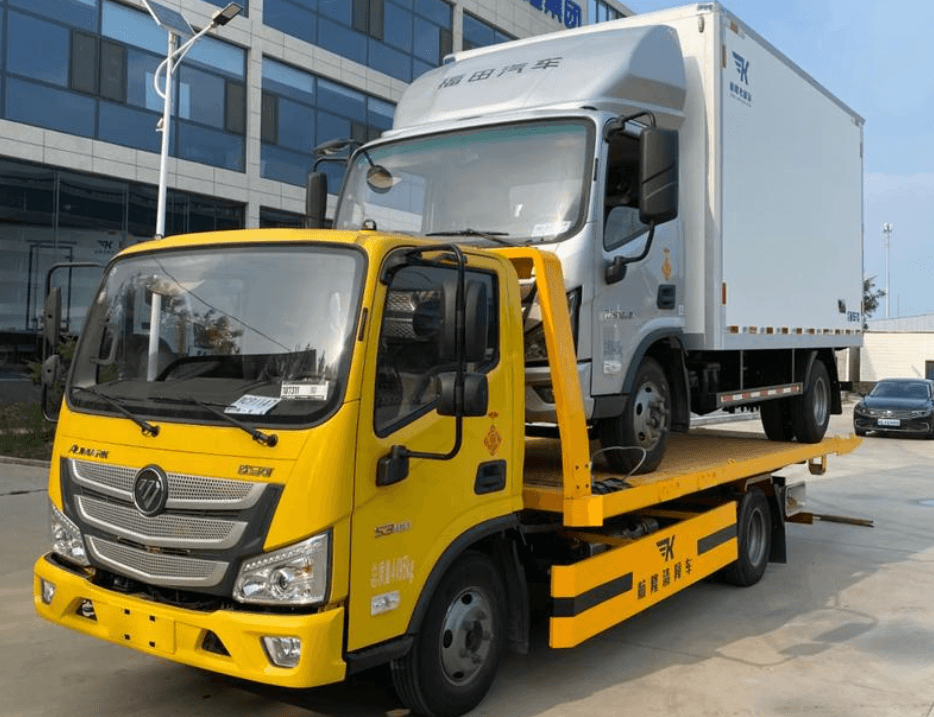
40 Ton vs. 50 Ton vs. 60 Ton Wrecker Trucks
One of the first decisions buyers need to make is the required recovery capacity.
However, the advertised tonnage should not be considered the only specification. Actual lifting capability depends on boom position, extension, lifting moment, underlift extension, chassis stability, and operating conditions.
| Configuration | Typical Application | Main Advantage |
|---|---|---|
| 30–40 ton wrecker | Heavy trucks, buses and general highway recovery | Lower investment and easier operation |
| 40 ton wrecker | Commercial truck and trailer recovery | Good balance between capacity and cost |
| 50 ton wrecker | Highway accidents and heavy commercial recovery | High recovery capability |
| 60 ton wrecker | Severe accident and heavy equipment recovery | Maximum lifting capability |
| Heavy-duty rotator | Complex recovery, overturned vehicles and difficult access | Multi-angle recovery |
A 40-ton wrecker may be sufficient for a fleet primarily recovering commercial trucks, while a 50-ton or 60-ton configuration is more suitable when severe accidents, overturned trailers, or heavy equipment recovery are common.
Before purchasing, calculate the maximum real-world vehicle weight you expect to recover rather than selecting a capacity based only on marketing specifications.
Heavy Duty Wrecker Truck Specifications
A professional RFQ should cover the complete recovery system instead of simply requesting a “50-ton tow truck.”
Chassis Configuration
The chassis determines the foundation of the recovery vehicle.
Common configurations include:
- 6×4
- 8×4
- Multi-axle heavy-duty chassis
The chassis should be selected according to:
- Gross vehicle weight
- Axle load
- Engine power
- Wheelbase
- Recovery body weight
- Local road regulations
- Maximum towing requirements
Chinese heavy-duty chassis brands commonly used for special vehicle applications include SINOTRUK, SHACMAN, DONGFENG and other commercial vehicle manufacturers.
For international buyers, chassis availability and local spare-parts support should be considered alongside the initial purchase price.
Recovery Boom
The boom is one of the most important structural components of a heavy-duty wrecker.
Buyers should request the following specifications:
- Maximum lifting capacity
- Maximum boom length
- Number of boom stages
- Maximum working angle
- Lifting moment
- Hydraulic cylinder specifications
- Boom material
- Extension mechanism
- Safety locking system
Do not compare two wrecker trucks only by their headline lifting capacity.
For example, a truck advertised as a “50-ton wrecker” may have a substantially lower lifting capacity when the boom is fully extended.
The supplier should therefore provide a capacity chart showing lifting performance at different boom positions and extensions.
Hydraulic Winches
Winches provide the pulling force needed to recover disabled or overturned vehicles.
Heavy-duty wreckers may use one or two hydraulic winches depending on the configuration.
Important parameters include:
- Rated pulling force
- Number of winches
- Wire rope length
- Wire rope diameter
- Hydraulic motor
- Planetary gear system
- Fairlead
- Remote control
For severe recovery operations, dual winches can provide better control and allow operators to apply pulling force from different directions.
Underlift
The underlift is used to lift the front or rear axle of a disabled vehicle so that it can be towed.
When comparing underlift systems, check:
- Maximum lifting capacity
- Retracted capacity
- Extended capacity
- Maximum extension
- Hydraulic cylinder size
- Wheel yoke configuration
- Maximum towing weight
This is particularly important because the effective lifting capacity normally decreases as the underlift is extended.
Therefore, a supplier should provide both retracted and extended capacity figures instead of quoting only one maximum number.
Hydraulic System
The hydraulic system controls the boom, winches, underlift, outriggers, and other recovery functions.
A professional configuration should specify:
- Hydraulic pump
- PTO
- Hydraulic valves
- Hydraulic cylinders
- Hydraulic oil tank
- Operating pressure
- Flow rate
- Control system
- Emergency shutdown system
The PTO and hydraulic pump must be matched to the chassis engine and the required hydraulic flow.
An incorrectly matched hydraulic system can result in slow operation, excessive heat, unstable movement, or insufficient recovery performance.
Outriggers and Stability
Heavy lifting generates substantial forces on the chassis.
Outriggers help stabilize the vehicle when the boom is operating under load.
Buyers should check:
- Outrigger type
- Number of outriggers
- Extension range
- Hydraulic cylinder specifications
- Ground support area
- Control method
- Safety interlocks
For 50-ton and 60-ton recovery vehicles, stability should be treated as a core engineering requirement rather than an optional accessory.
Heavy Duty Wrecker Truck Applications
The right configuration depends heavily on the operating environment.
Highway Recovery
Heavy-duty wreckers are commonly used to clear disabled tractor-trailers and accident-damaged trucks from highways.
A rotator can be particularly useful when the recovery vehicle needs to operate at an angle to the accident scene.
Truck and Bus Recovery
Fleet operators and commercial towing companies can use heavy wreckers to recover:
- Tractor trucks
- Trailers
- Buses
- Coaches
- Heavy-duty delivery vehicles
Overturned Vehicle Recovery
When a truck or trailer has overturned, the recovery process may require multiple winches, a high-capacity boom, and stabilizing equipment.
A rotator configuration can provide greater flexibility in positioning the recovery boom.
Construction and Industrial Equipment Recovery
Some heavy-duty recovery vehicles are configured to recover construction machinery and industrial equipment from difficult locations.
In these applications, buyers should pay particular attention to boom reach, lifting moment, ground stability, and winch pulling force.
How to Choose the Right Chassis
The chassis should be evaluated together with the complete wrecker body.
6×4 Chassis
A 6×4 chassis is commonly used when the required recovery capacity and vehicle dimensions can be accommodated by three axles.
It can offer a useful balance between:
- Payload
- Maneuverability
- Cost
- Axle capacity
8×4 Chassis
An 8×4 configuration provides additional axle capacity and can be suitable for larger heavy-duty recovery bodies.
It is often considered when buyers require higher gross vehicle weight or additional structural capacity.
What Should Buyers Check?
Before selecting a chassis, confirm:
- Engine power
- Torque output
- GVW
- Front axle rating
- Rear axle rating
- Wheelbase
- Suspension
- Tire size
- Emission standard
- Steering side
- Local service network
The chassis must also comply with the regulations of the destination country.
Heavy Duty Wrecker Truck Price in China
The price of a heavy duty wrecker truck in China varies significantly according to the configuration.
Key cost factors include:
- Chassis brand and model
- Engine power
- Axle configuration
- Recovery capacity
- Boom design
- Underlift capacity
- Number and capacity of winches
- Hydraulic components
- Outrigger configuration
- Wireless remote control
- Steel grade and structural design
- OEM customization
- Export requirements
- Shipping destination
A standard heavy-duty integrated wrecker and a 60-ton rotator can have very different prices because their chassis, hydraulic systems, boom structures, winches, and stabilization systems are substantially different.
For this reason, buyers should avoid comparing suppliers based solely on the lowest quoted price.
Instead, request a configuration-based quotation that clearly lists the chassis, recovery equipment, hydraulic components, accessories, warranty, and shipping terms.
OEM Heavy Duty Wrecker Truck from China
Many international buyers need a configuration that differs from a standard factory model.
Typical OEM requirements include:
- LHD or RHD
- Different chassis brands
- Customized wheelbase
- Different boom capacity
- Single or dual winches
- Custom underlift
- Wireless remote control
- Additional toolboxes
- Warning lights
- Customized paint
- Customer branding
- Local compliance equipment
Some buyers may also choose an SKD or body-only solution, especially when the destination market has a strong local chassis supply chain.
In this case, the Chinese supplier can provide the recovery body, subframe, boom, hydraulic system, and related equipment for installation onto a local chassis.
- China Tow Truck Manufacturer: OEM Sourcing, Specs & Export Guide
- Tow Truck Price in China: Cost by Type & Configuration
- Tow Truck Specifications: Chassis, Winch, Boom and Underlift
- Flatbed Tow Truck vs Wheel Lift Tow Truck: Which Is Better?
- Tow Truck Types in China: Technical Configurations and Sourcing
- Tow Trucks in China: Vehicle Types, Configurations and Sourcing Options
How to Buy a Heavy Duty Wrecker Truck from China
A structured sourcing process can reduce technical and commercial risks.
Step 1: Define Your Recovery Requirement
Start by defining:
- Maximum vehicle weight
- Typical recovery vehicle type
- Maximum towing requirement
- Required lifting capacity
- Recovery environment
- Road conditions
- Expected operating frequency
Step 2: Select the Vehicle Configuration
Decide whether you need:
- Integrated wrecker
- Heavy-duty wrecker
- Rotator wrecker
- 6×4
- 8×4
- 40-ton
- 50-ton
- 60-ton
Step 3: Prepare an RFQ
Your RFQ should include:
- Chassis requirements
- Engine requirements
- GVW
- Axle configuration
- Boom capacity
- Boom reach
- Winch capacity
- Underlift capacity
- Hydraulic system
- Outriggers
- Steering side
- Emission standard
- Destination country
- Required quantity
The more complete the RFQ, the easier it is to compare quotations from different manufacturers.
Step 4: Compare Manufacturers
Do not compare only the FOB price.
Evaluate:
- Factory capability
- Previous export experience
- Engineering capacity
- Structural welding quality
- Hydraulic component quality
- Quality-control process
- Warranty
- Spare-parts support
- Delivery time
- Export experience
Step 5: Inspect Before Shipment
For high-value recovery vehicles, buyers should consider pre-shipment inspection.
Important inspection points include:
- Chassis identification
- Vehicle dimensions
- Welding quality
- Hydraulic leakage
- Boom operation
- Winch operation
- Underlift operation
- Outrigger operation
- Electrical system
- Paint quality
- Safety equipment
China Wrecker Truck Manufacturer: What Should You Ask?
When contacting a Chinese manufacturer, ask these questions before requesting a final quotation:
Technical Questions
- What is the actual lifting capacity at full boom extension?
- What is the underlift capacity when fully extended?
- What is the pulling force of each winch?
- What hydraulic pump and valve brands are used?
- What is the maximum boom reach?
- What chassis and axle ratings are available?
- Can the truck be supplied in LHD or RHD?
Commercial Questions
- What is the MOQ?
- What is the production lead time?
- What warranty is provided?
- Are spare parts available?
- Can you provide a factory inspection?
- Can you arrange third-party inspection?
- What export documents are provided?
Compliance Questions
- Which emission standard is available?
- Can the configuration meet destination-country requirements?
- Can the supplier provide the required technical documents?
- Can the chassis and recovery body be customized for local regulations?
40-Ton, 50-Ton or 60-Ton: Which One Should You Buy?
The answer depends on the type of recovery work your fleet performs.
Choose a 40-ton wrecker when your main requirement is commercial truck and trailer recovery without regularly handling the heaviest vehicles.
Choose a 50-ton wrecker when your operation includes frequent highway accidents, heavy tractor-trailer recovery, or overturned commercial vehicles.
Choose a 60-ton wrecker or heavy-duty rotator when maximum recovery capability, difficult positioning, or heavy equipment recovery is required.
The correct choice is not necessarily the truck with the highest advertised capacity. A properly matched chassis, boom, hydraulic system, winch, and stabilization system can provide better operational value than an oversized configuration.
Heavy Duty Wrecker Truck Buying Checklist
- Maximum recovery weight
- Maximum towing weight
- Boom lifting capacity
- Boom extension
- Lifting moment
- Winch pulling force
- Number of winches
- Underlift capacity
- Underlift extension
- Chassis configuration
- Engine power
- GVW
- Axle ratings
- Hydraulic pump
- PTO
- Hydraulic valves
- Outriggers
- Wireless remote
- LHD or RHD
- Emission standard
- Local compliance
- Warranty
- Spare parts
- Inspection
- Shipping terms
Source Heavy Duty Wrecker Trucks from China
Finding the right heavy-duty recovery vehicle requires more than comparing product photos or the lowest quotation.
International buyers need to compare the complete technical configuration, manufacturer capability, chassis, recovery equipment, hydraulic system, customization options, and export support.
CNSpecialVehicle helps international buyers discover and compare Chinese special vehicle manufacturers and recovery vehicle solutions.
Whether you need a 40-ton heavy-duty wrecker, 50-ton rotator, 60-ton recovery truck, OEM wrecker body, or customized recovery vehicle, you can use the platform to identify suitable suppliers and communicate your technical requirements.
Ready to source a heavy duty wrecker truck from China?
Submit your required capacity, chassis configuration, destination market, and quantity to start the sourcing process.