
China has become one of the world's largest suppliers of fire trucks and special-purpose emergency vehicles. With advanced manufacturing capabilities, competitive pricing, and mature export experience, Chinese fire truck manufacturers now serve customers across Asia, Africa, the Middle East, South America, and other international markets.
The main fire truck production base in China is located in Suizhou, Hubei Province, where hundreds of specialized vehicle manufacturers produce water tank fire trucks, foam fire trucks, aerial ladder trucks, airport rescue vehicles, and customized firefighting solutions.
This guide explains China's fire truck manufacturing bases, leading supplier regions, production capabilities, and key factors international buyers should consider before purchasing fire engines from China.
Identifying where these vehicles are made provides insight into the quality, technology, and logistical advantages of different suppliers. In the fire rescue industry, the "industrial cluster" model ensures that components like high-pressure pumps, foam proportioning systems, and hydraulic ladders are sourced and integrated within a tight geographical radius, significantly optimizing production lead times.
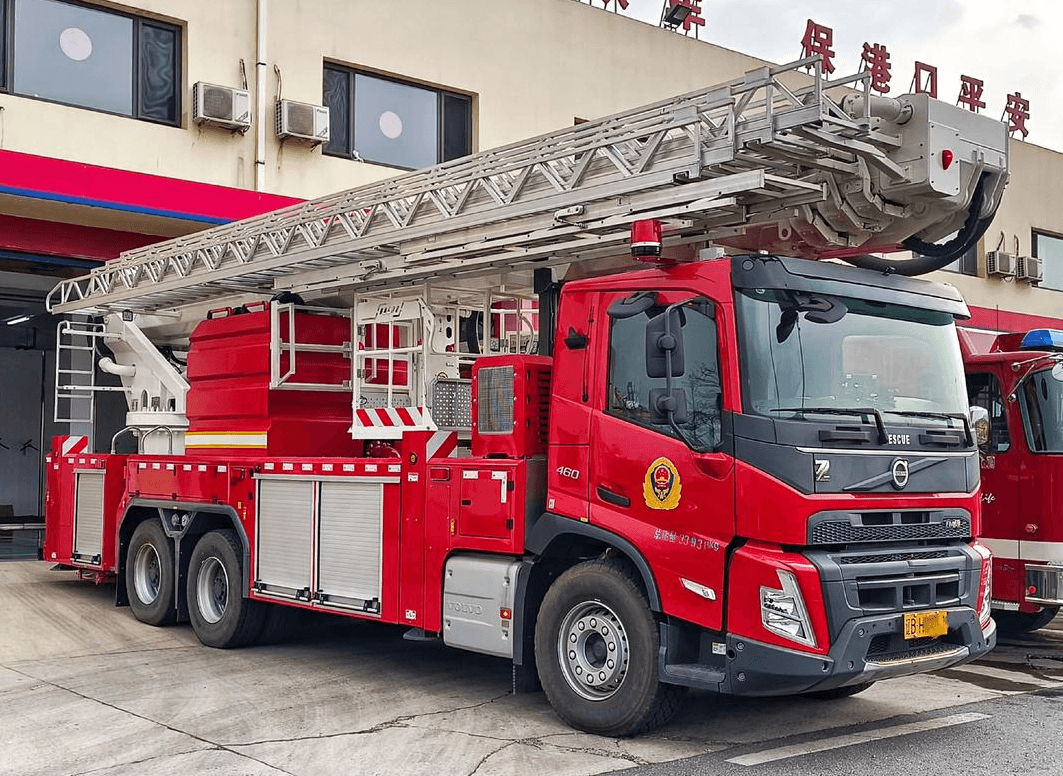
Suizhou, Hubei: The "Capital of Special Purpose Vehicles"
When discussing fire truck manufacturing in China, Hubei Province—specifically the city of Suizhou—is the undisputed epicenter. Recognized officially as the "Capital of Special Purpose Vehicles in China," Suizhou accounts for a massive percentage of the country’s total SPV output.
The region has developed a mature supply chain and experienced workforce. Manufacturers in this region, such as CSCTRUCK, benefit from a mature ecosystem where specialized steel fabrication, tank anti-corrosion treatment, and fire pump integration are standard local competencies.
Why Suizhou leads the market:
- Chassis Proximity: Close proximity to Dongfeng Motor Corporation (in nearby Shiyan and Wuhan) allows for seamless chassis procurement and technical synchronization.
- Diverse Product Range: Suizhou factories specialize in high-volume production of Water Tank Fire Trucks and Foam Fire Trucks, which are the workhorses of municipal fire departments.
- Export Infrastructure: The region has established logistics corridors specifically designed for the movement of heavy machinery to major ports like Shanghai and Shenzhen.
Regional Production Bases and Their Specializations
While Suizhou is the primary hub, other regions in China have carved out niches based on technical specializations and regional industrial strengths.
| Production Region | Primary Specialization | Key Advantage |
|---|---|---|
| Hubei (Suizhou/Wuhan) | Multi-functional Fire Trucks, Tankers, Rescue Vehicles | Complete supply chain; highest production volume. |
| Shandong (Jinan/Liaocheng) | Heavy-duty Fire Trucks, Airport Crash Tenders | Proximity to SINOTRUK; expertise in heavy-duty chassis. |
| Shanghai & East China | High-end Aerial Platforms, CAFS Tech | Advanced electronics integration and high-reach ladder technology. |
| Sichuan (Chengdu) | Forest Fire Trucks, All-terrain Vehicles | Focus on off-road capabilities and rugged terrain performance. |
| Beijing/Tianjin | Specialized Command & Communication Vehicles | High-tech R&D for emergency management software and sensors. |
Shandong Province, particularly around Jinan, focuses on the heavy-end of the spectrum. Because Jinan is the headquarters of SINOTRUK (CNHTC), fire truck manufacturers in this region often lead in the production of heavy-duty foam pumpers and airport fire rescue vehicles that require high-horsepower engines and robust 6x4 or 8x4 configurations.
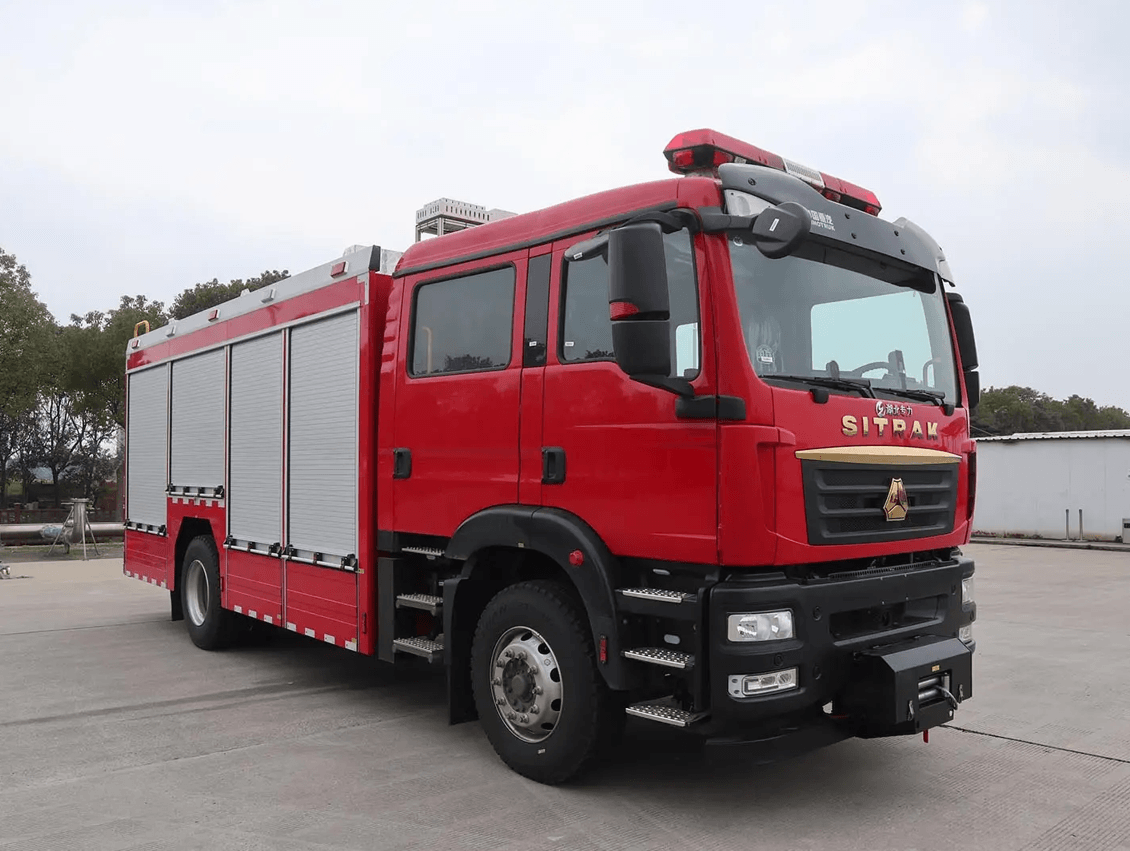
The Shanghai/Jiangsu Tech Corridor
In the eastern coastal regions, the focus shifts from volume to high-specification technology. This area is known for "Aerial Ladder Fire Trucks" and "Elevating Platform Trucks." Manufacturers here often collaborate with European or American component suppliers for hydraulic systems and telescopic sensors, catering to urban environments with high-rise density.
How Chinese Fire Trucks Are Manufactured: Manufacturing Logic
In the Chinese manufacturing context, a fire truck is viewed as a complex integration project consisting of two main parts: the Chassis and the Superstructure.
- Chassis Selection: Most Chinese factories utilize domestic chassis from brands like Dongfeng, Sinotruk, Shacman, or Foton. For high-end export or specific municipal requirements, they also integrate "Upper-structures" onto imported chassis like MAN, Mercedes-Benz, or Scania.
- Superstructure Fabrication: This involves the "body" of the truck. In hubs like Suizhou, this includes the use of high-quality carbon steel or stainless steel for water tanks, and aluminum alloy for equipment compartments to reduce weight and prevent corrosion.
- Firefighting System Integration: This is the core engineering phase where the PTO (Power Take-Off), fire pump, and monitor (water cannon) are installed. The technical calibration between the engine’s power output and the pump’s pressure requirements is the hallmark of a high-quality factory.
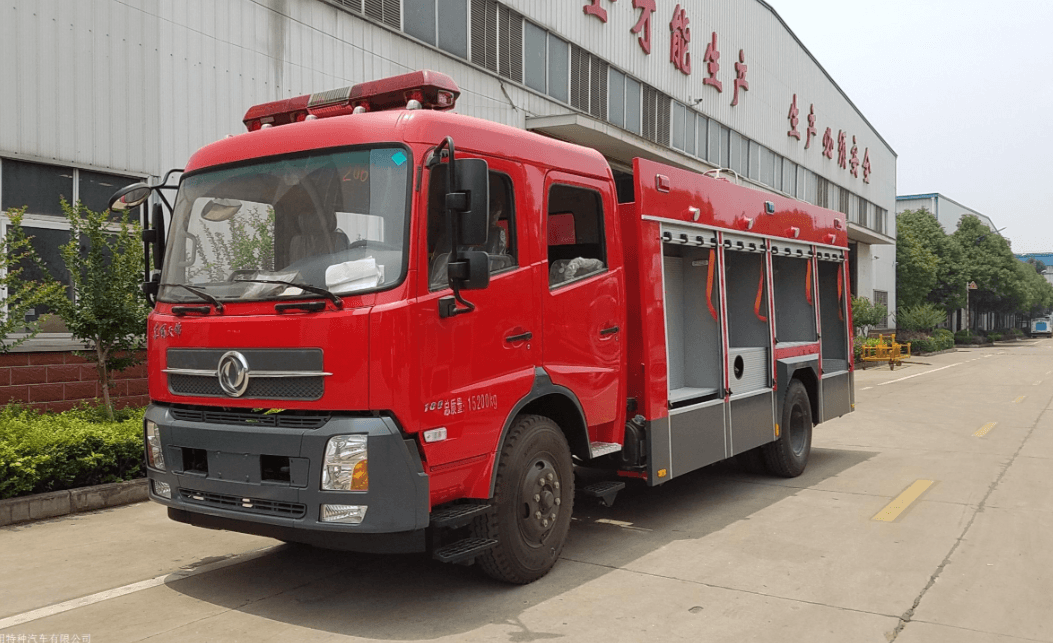
For instance, modern Emergency Rescue Fire Trucks manufactured in these hubs are now frequently equipped with 360-degree lighting towers, hydraulic cutters, and specialized shelving systems that maximize space for rescue gear—a direct result of evolving urban rescue needs.
Quality Standards and Export Compliance
A common question among international buyers is how China-made fire trucks meet global standards. The manufacturing bases mentioned above operate under several layers of certification:
- CCC (China Compulsory Certification): All fire trucks sold domestically or manufactured for export must meet these rigorous safety and quality benchmarks.
- ISO 9001/14001: Standard for management and environmental systems in major factories.
- NFPA and EN Standards: While China has its own GB (Guobiao) standards, many leading manufacturers now design their "export-edition" vehicles to align with NFPA 1901 (USA) or EN 1846 (Europe) standards to facilitate smoother entry into international markets.
Strategic Considerations for Procurement
When evaluating a "Fire Truck Factory in China," it is not enough to look at the price. A technical consultant would recommend looking at the factory's integration capability.
Does the factory have its own pump testing facility? Do they perform tilt tests to ensure vehicle stability? In the Suizhou hub, the best manufacturers offer comprehensive "Pre-Delivery Inspections" (PDI) that include testing the foam/water throw range and the structural integrity of the tank under pressure. For international clients, sourcing from established clusters ensures that spare parts (like valves, gaskets, and nozzles) are standardized and easily replaceable.
Reference Sources:
- China Association for Special Purpose Vehicles (CASPV) - Regional Industry Reports.
- Ministry of Industry and Information Technology (MIIT) - Manufacturing Cluster Directory.
- Standardization Administration of the People's Republic of China (SAC) - GB 7956 Fire Engines Requirements.
- CSCTRUCK Technical Documentation - Product Specifications and Engineering Standards.