
Efficient municipal solid waste (MSW) management relies on more than just "picking up trash." It is a complex logistical operation requiring specific mechanical configurations to handle varying waste densities, urban layouts, and environmental regulations. For municipal planners and fleet managers, understanding the nuances of vehicle engineering is the first step toward operational efficiency.
This guide breaks down the primary classifications of sanitation trucks, their mechanical principles, and how the Chinese manufacturing sector—a global hub for special-purpose vehicles—categorizes these essential machines.
The Core Classification: How Garbage Trucks are Categorized
The "garbage truck China guide" typically begins with the loading mechanism. While a chassis (such as Dongfeng, Isuzu, or Sinotruk) provides the mobility, the "upper body" or superstructure defines the vehicle’s utility.
Compactor Garbage Trucks (Rear Loaders)
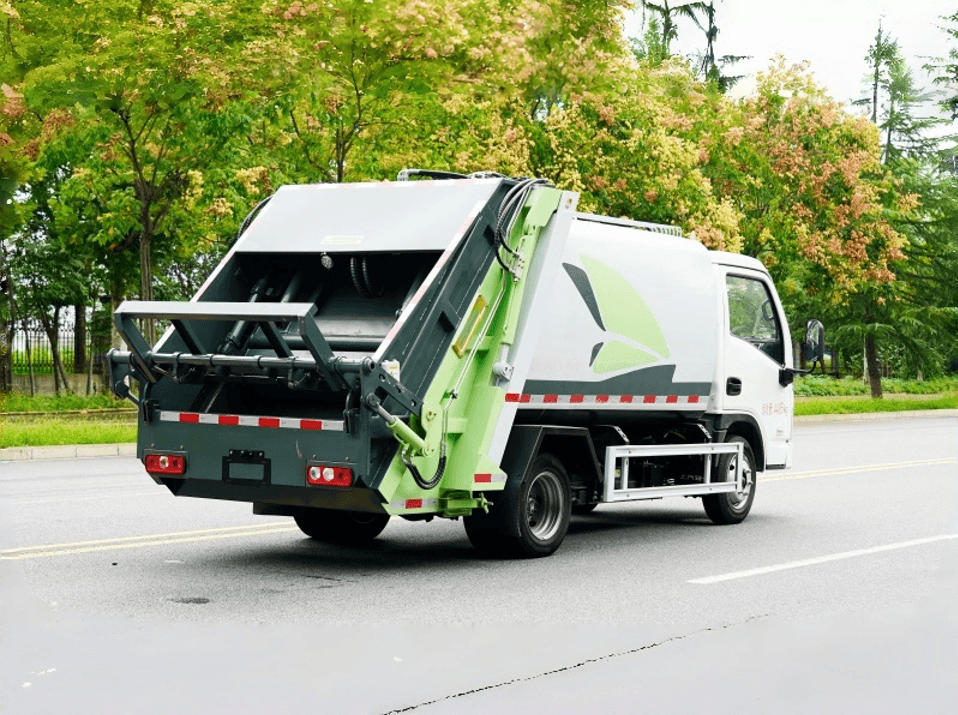
The compactor is the workhorse of urban sanitation. It utilizes a high-pressure hydraulic system to compress waste, significantly increasing the payload capacity compared to open-body trucks.
- Mechanical Logic: A sweep plate and slide plate mechanism move waste from the hopper into the main body.
- Compression Ratios: Standard industrial models achieve ratios between 3:1 and 6:1, depending on the waste type (organic vs. inorganic).
- Key Advantage: Minimizes trips to the landfill by maximizing volume efficiency.
Hook Lift & Skip Loader Trucks
These are modular systems designed for "drop-and-collect" operations. Instead of a fixed body, the truck is equipped with a hydraulic hook or arm.
- Hook Lift: Uses a sliding or articulating arm to pull a container onto the truck bed.
- Skip Loader: Uses twin hydraulic arms to lift bins vertically.
- Application: Ideal for construction sites or high-density residential areas where containers are left on-site for days and collected once full.
Side Loaders (Manual and Automated)
Commonly used in residential curbside collection, side loaders are designed for speed and "one-man" operation. Automated Side Loaders (ASL) feature a robotic arm that grabs standardized bins, reducing labor costs and injury risks.
Technical Specifications and Material Science
Engineering a sanitation truck requires a balance between weight, durability, and corrosion resistance. Because MSW often contains moisture and organic acids, the "leakage" or leachate management is a critical design factor.
| Feature | Specification Detail | Municipal Benefit |
|---|---|---|
| Body Material | High-tensile carbon steel (Q235/Q345) or Hardox | Resistance to abrasive waste and structural deformation. |
| Hydraulic Pressure | 16 MPa to 20 MPa | Ensures consistent compaction force across the cycle. |
| Cycle Time | 15–30 Seconds | Directly impacts the speed of the collection route. |
| Sealing | Double-layer rubber gaskets | Prevents "leachate trail" (secondary pollution) during transport. |
| Control Systems | PLC (Programmable Logic Controller) | Allows for manual, semi-auto, or fully automatic cycles. |
Municipal Application Scenarios
Selecting the right vehicle depends entirely on the "micro-environment" of the collection route.
High-Density Urban Centers
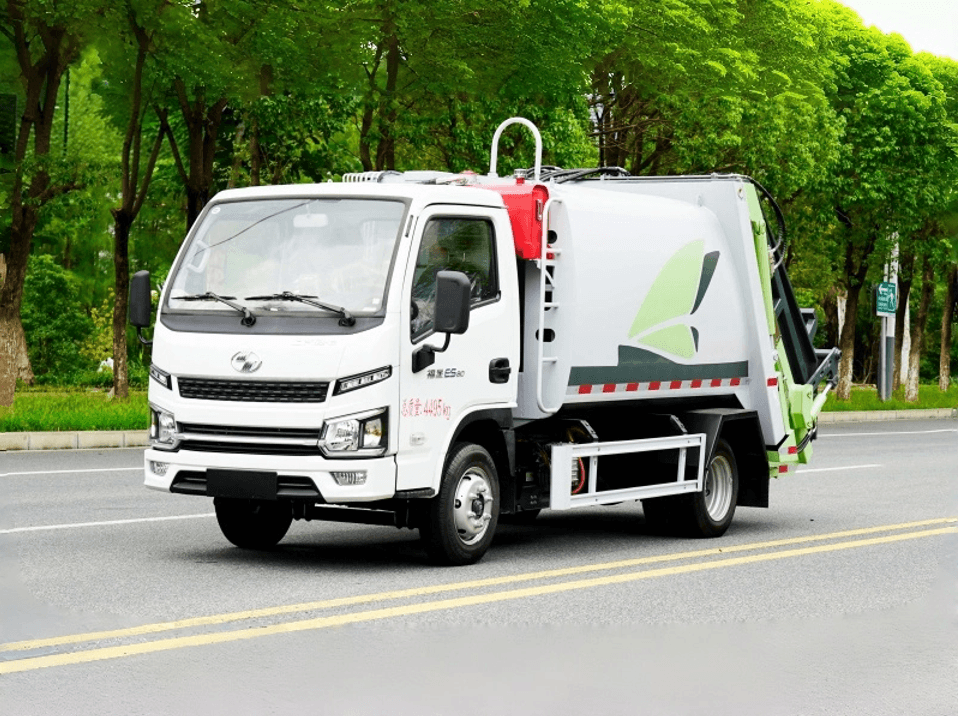
In crowded metropolitan areas, maneuverability is paramount. Small-capacity (3m³ to 6m³) compactor trucks built on short-wheelbase chassis are preferred. These vehicles can navigate narrow alleys while still providing the benefits of waste compression.
Industrial and Construction Zones
Waste in these sectors is often heavy and non-compressible. Hook lift trucks or Self-loading garbage trucks are the standard here. The focus is on gross vehicle weight (GVW) and the lifting capacity of the hydraulic cylinders rather than the compaction ratio.
Rural and Suburban Routes
For long-distance transport between collection points and transfer stations, large-capacity (12m³ to 20m³) rear loaders are the most cost-effective. Fleet managers often look for dual-pump hydraulic systems to ensure reliability in remote areas where maintenance facilities are sparse.
Navigating the Manufacturing Landscape in China
The Chinese sanitation vehicle industry has evolved from basic assembly to high-end OEM and ODM production. Modern manufacturers like CSCTRUCK integrate international standards (such as ISO9001) with localized chassis expertise.
When evaluating equipment via a "garbage truck China guide" lens, engineers focus on three integration points:
- Chassis Compatibility: Ensuring the Power Take-Off (PTO) is correctly matched to the hydraulic pump's displacement.
- Climate Adaptation: Special coatings for high-humidity coastal regions or heating elements for hydraulic reservoirs in arctic climates.
- Component Sourcing: The use of international hydraulic valve brands (like Multi-way valves) versus high-quality domestic alternatives to balance cost and performance.
Environmental and Safety Compliance
Modern sanitation trucks are increasingly required to meet stringent emission standards (Euro 5/Euro 6) and safety protocols. Features such as emergency stop buttons, rear-view camera systems, and two-hand operation requirements for compactors are no longer optional—they are essential for municipal tender compliance.
Furthermore, the rise of Electric Garbage Trucks (EV) is reshaping the industry. In noise-sensitive urban areas, electric drive systems for the hydraulic units allow for "silent collection" during night hours, significantly improving the quality of life for residents.
Reference Sources
- ISO 16750: Road vehicles — Environmental conditions and testing for electrical and electronic equipment.
- ANSI Z245.1: American National Standard for Equipment Technology and Operations for Wastes and Recyclable Materials.
- Manufacturer Documentation: Technical specification sheets from CSCTRUCK Special Purpose Vehicle Division.
- Waste Management Association (WMA): Best practices for municipal solid waste logistics and fleet optimization.